.png)
The Importance of Internal Flights (Liners) in a Dryer Drum of an Asphalt Hot Mix Plant

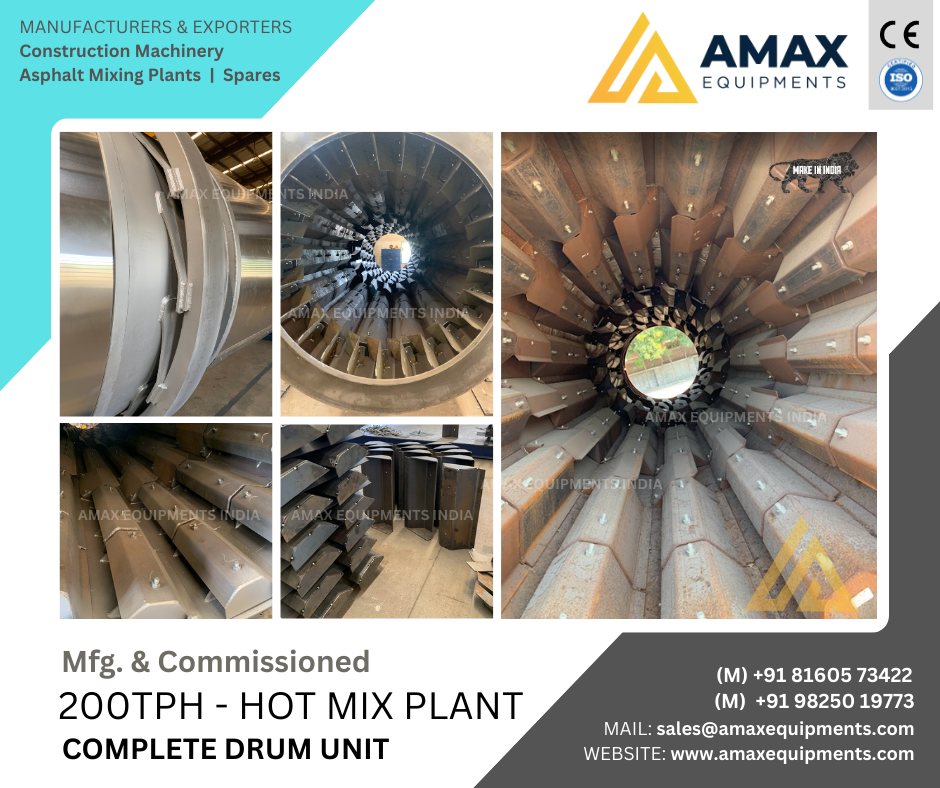
In an asphalt hot mix plant, the dryer drum plays a critical role in determining the quality, consistency, and efficiency of asphalt production. While burners and fuel systems often receive the spotlight, one of the most underrated yet vital components inside the drum is the internal flights, also commonly known as internal liners.
These internal flights are responsible for how aggregates are lifted, cascaded, and exposed to heat inside the rotating dryer drum. Their design, material selection, and precision of installation directly impact drying efficiency, fuel consumption, and final mix quality.
What Are Internal Flights / Liners?
Internal flights are fabricated steel plates mounted inside the dryer drum shell. As the drum rotates, these flights lift the aggregates and create a uniform curtain of material across the flame and hot gas stream, ensuring efficient heat transfer.
Their primary function is not just to move aggregates—but to control how aggregates interact with heat.
Why Internal Flights Are Crucial for Efficient Drying
1. Uniform Heat Exposure
Properly designed flights create a consistent aggregate curtain, allowing hot gases to pass evenly through the material. This ensures:
Uniform moisture evaporation
Prevention of cold spots
Consistent aggregate temperature before mixing
Without optimized flights, aggregates tend to slide or roll instead of cascading, leading to inefficient drying.
2. Faster Moisture Removal
Well-engineered internal liners increase aggregate surface area exposure to hot air. This accelerates moisture removal, enabling the drum to achieve:
Higher output capacity
Lower residence time
Stable aggregate discharge temperatures
This becomes especially important in high-capacity plants and in regions with high aggregate moisture content.
3. Achieving Required Aggregate Temperatures
To produce quality asphalt, aggregates must reach 160–180°C (or higher) depending on mix design. Precision flight geometry ensures:
Correct material lift angle
Adequate drop height
Balanced heat absorption
Incorrect flight design can lead to underheated aggregates or overheating, both of which negatively affect bitumen coating and asphalt durability.
4. Improved Fuel Efficiency
Optimized internal flights allow maximum heat utilization, which directly reduces:
Burner fuel consumption
Heat loss through exhaust gases
Load on pollution control systems
A poorly designed flight system forces operators to increase burner output to compensate for heat inefficiency.
5. Reduced Aggregate Degradation
Precision-cut liners ensure smooth lifting and controlled dropping of aggregates, minimizing:
Aggregate breakdown
Excess fines generation
Uneven gradation
This protects the aggregate structure and ensures compliance with mix design specifications.
Importance of Precision in Flight Design & Installation
6. Flight Pattern Matters
Different zones of the dryer drum require different flight profiles:
Charging zone: Aggressive lifting for wet aggregates
Mid-drying zone: Uniform cascading for maximum heat transfer
Discharge zone: Reduced lift to stabilize material flow
A one-pattern-fits-all approach leads to inefficiencies.
7. Correct Material & Thickness Selection
Internal liners are exposed to:
High temperatures
Abrasive aggregates
Continuous impact
Using the correct steel grade and thickness improves:
Wear resistance
Service life
Plant uptime
8. Balanced Drum Performance
Precision alignment and symmetric flight installation ensure:
Smooth drum rotation
Reduced vibration
Lower load on trunnions and drive systems
Even small deviations in liner positioning can affect mechanical stability.
Impact on Overall Plant Performance
A well-designed internal flight system contributes to:
Higher TPH output
Stable aggregate temperatures
Lower emissions
Improved asphalt quality
Reduced operating cost per ton
In high-capacity plants, the internal liner system often defines whether the plant operates at rated capacity or below potential.


Comments